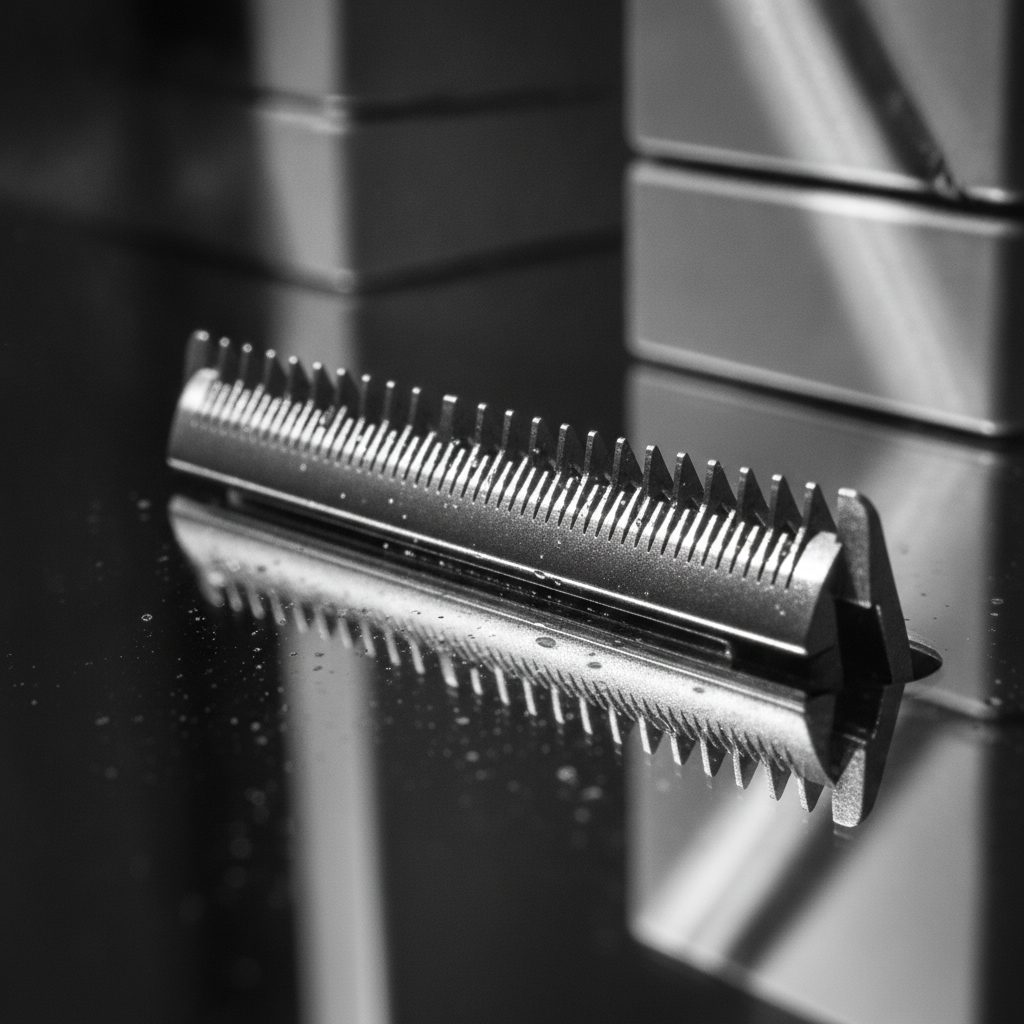
Six disciplines. One standard of precision.
Exploring blade metallurgy and HRC ratings. From stainless to titanium — what the numbers actually mean for your daily shave.
The isolation of cold air, wet steel, and distilled cedar. The molecular basis of masculine fragrance composition.
The complete archive of grooming science and engineering. Every guide, every review, every verdict.
HRC ratings define edge hardness. Stainless steel sits at 55–58 HRC; titanium-coated blades reach 800 HV equivalent. Higher hardness means finer edge geometry and longer retention — but brittleness increases. The optimal blade is an engineered compromise.
Every shave mechanically exfoliates the stratum corneum — the 15-cell-deep outermost layer. Male dermis is 25% thicker than female, producing 4× more sebum per unit area. Understanding these biological parameters dictates product selection and technique.
Fragrance longevity is determined by molecular weight and volatility. Top notes (citrus, aldehydes: low MW, high volatility) dissipate in 15–30 minutes. Base notes (musks, woods: high MW) persist for 8–12 hours. Understanding the pyramid is understanding longevity.
Oscillation frequency, cutting geometry, skin biology — everything that actually determines which electric shaver technology wins.
READ →Six electric shavers ranked by motor performance, blade engineering and real-world results from $79 to $429.
READ →Male skin is biologically distinct. A 4-step routine built around the actual science of the male dermis.
READ →